visit Telti

Villages and walks Municipalities Places Telti

TELTI

""The Hill on the Sea" is an unmissable stop on the Gallura tour.

GALLURA DISCOVERY ENGINE

Find out what to visit and what to do in Telti

Gallura Discovery Engine is the tool designed for you, to help you discover the area quickly and easily.

🌤️ WHAT'S THE WEATHER LIKE THERE TODAY?
Look outside, let us know, and we'll suggest the perfect Gallura for this day.
visit Telti
3 📏 Radius

Immersed in a suggestive landscape dominated by granite masses shaped by time and wind and forests of holm oaks and cork oaks, wild olive trees and Mediterranean scrub, Telti It is a typical Gallura hilltop town that has preserved the traditions of an economy based on agriculture and pastoralism, which has been integrated, respecting the place and customs, with a tourism offering. Local businesses specialize in granite, iron, and woodworking, alongside the production of fresh pasta. Telti work one Pro Loco A very active and dynamic community, each year it organizes a series of events that attract and entertain tourists and lovers of tradition and folklore from across the Gallura region and surrounding areas. Local traditions are still deeply felt and celebrated in these towns, which are commemorated in these events, keeping alive the memory of the history and culture of a people deeply rooted in their origins.


Telti in Gallura


Its name derives from Tertium, a Roman military station at the crossroads of the Olbia-Gemella road, and in the medieval period it was transformed into Villa Torcis, a village embroiled in a long war in the 14th century between the Crown of Aragon and the Giudicato of Arborea. The modern town dates back to the 18th century, when the various nearby stazzi gathered around the two churches of Sant'Anatolia (18th century) and Santa Vittoria, completed in 1899 in 18th-century style, now located in the heart of the town. Both once served as religious centers for residents of nearby towns, who gathered there for worship.

The small historic center hosts the unusual colored granite and several murals, while not far from the center you can visit the Cultural and Natural Museum of Sardinia which collects objects of local daily life, from traditional domestic spaces, to animal life, botany and minerals.
Just outside the town, in the direction of Calangianus, stands the country church of San Bachisio from the 17th century, celebrated in May with a community lunch. Particularly fascinating are the Holy Week rituals and the processions in traditional dress for the feast days of Saints Anatolia and Victoria.

The area is rich in springs and streams which have allowed for particularly thick and lush vegetation. Mount Pinu It is the highest peak, at 750 meters above sea level, and is characterized by a vast maritime pine forest. The discovery of burials in cavities naturally formed in granite formations confirms human presence in the area since the Neolithic (5000-2700 BC). Some house of Janas They date to the subsequent Copper Age. The area was densely populated in the Bronze Age, and the Nuragic, Irish, and Balares cultures left traces of their settlements in the form of a series of nuraghe. 

visit Telti

The historic center

The small historic center hosts the unusual colored granite and several murals, while not far from the center you can visit the Cultural and Natural Museum of Sardinia which collects objects of local daily life, from traditional domestic spaces, to animal life, botany and minerals.

Just outside the town, in the direction of Calangianus, stands the country church of San Bachisio from the 17th century, celebrated in May with a community lunch. Particularly fascinating are the Holy Week rituals and the processions in traditional dress for the feast days of Saints Anatolia and Victoria.

The area is rich in springs and streams which have allowed for particularly thick and lush vegetation. Mount Pinu It is the highest peak, at 750 meters above sea level, and is characterized by a vast maritime pine forest. The discovery of burials in cavities naturally formed in granite formations confirms human presence in the area since the Neolithic (5000-2700 BC). Some house of Janas They date to the subsequent Copper Age. The area was densely populated in the Bronze Age, and the Nuragic, Irish, and Balares cultures left traces of their settlements in the form of a series of nuraghe. 

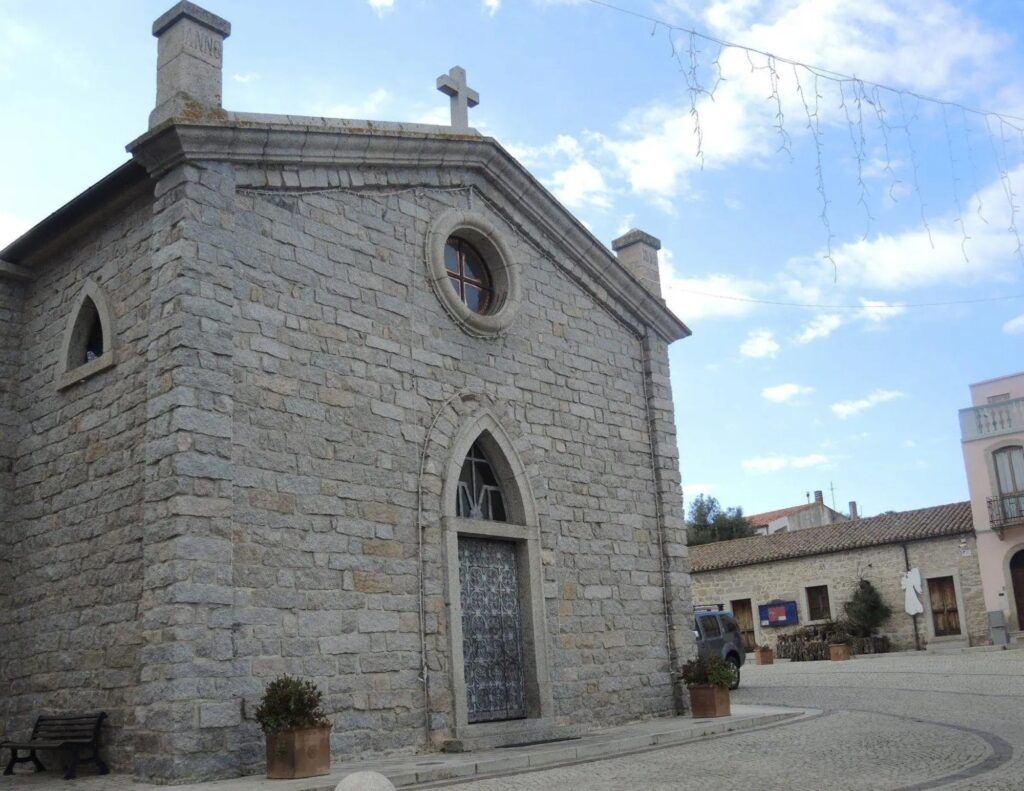
Church of Santa Vittoria

Built in the 19th century in eighteenth-century style, with the typical architecture of Gallura churches, the beautiful Church of Santa Vittoria It stands in the center of the town. Built entirely of exposed granite ashlars, it stands on the same site that had housed a previous place of worship, now degraded and no longer sufficient for a population that was experiencing a constant demographic increase. During the excavation for the construction of the new church, a enkolpion A small bronze pectoral cross of Middle Eastern origin, probably Syrian, dating between the 6th and 7th centuries AD. Only the front part, engraved with a thin tip of Christ's crucifix, remains. Blessed with a solemn mass on August 13, 1899, the bell tower was built in 1901. 

Over the years, sacred furnishings were added and several restorations were carried out, in 1922, 1961, 1994, 1996, and finally in 2007, which saw the addition, as required by the Second Vatican Council, of the liturgical focal points: the altar, the ambo, and the celebrant's seat, all made of pure white Greek marble. Once all the necessary elements were in place, the church was consecrated and dedicated to Saint Victoria on December 9, 2007. In 2009, the Baptistery, always in marble, and the triptych of Santa Vittoria, pictorial images of Byzantine style; the same technique is used to create the’icon of the Good Shepherd located last year in the niche behind the Officiant's Seat.

Church of Santa Vittoria - Telti

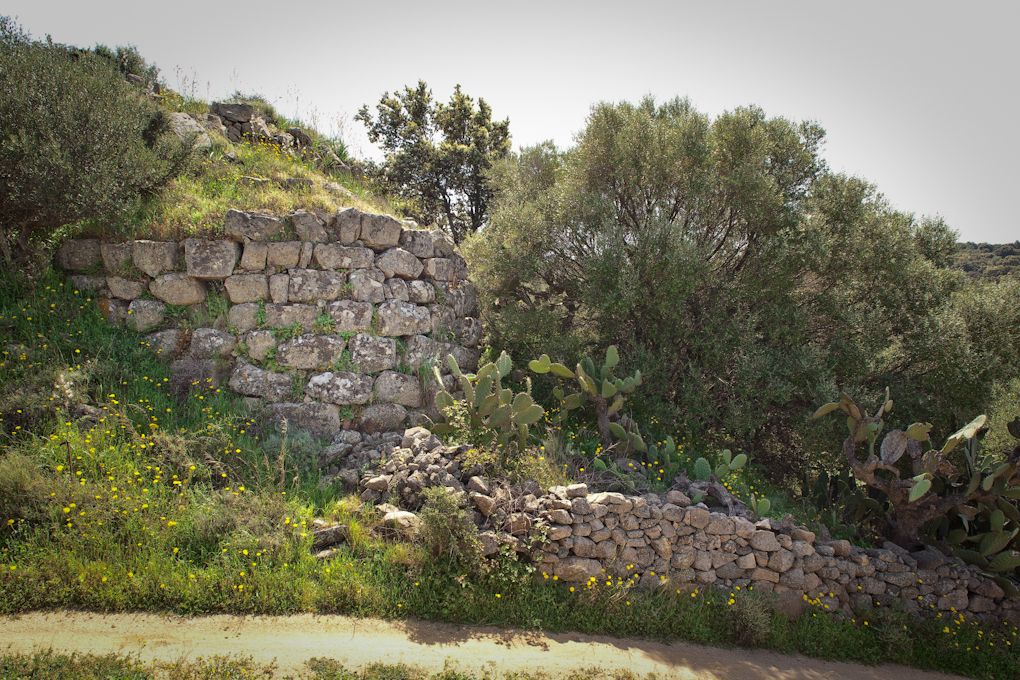
Nuraghe "Lu Naracu di Putzolu""

Partially covered by abundant vegetation, behind a large mastic tree, it's possible to glimpse the entrance leading to a small, underground circular room with a tholos roof. On the left, there's a small opening leading to another chamber. Opposite, the top of another small opening suggests an original level lower than the one visible. Recognized as a "mixed type," with characteristics that combine corridor and tholos nuraghe, the exterior still features rows of stones that formed the monument's wall facing, with medium- and large-sized granite blocks. 

The main entrance has not been identified, but is assumed to be to the south, as in most nuraghes. Without conclusive scientific data, it is impossible to date it precisely or attribute a certain function to it. Apparently intended for residential and defensive purposes, it dates back to the Bronze Age or Iron Age. 
It can be reached along the road that leads from Telti towards Olbia.

Putzolu - Telti nuraghe

Nuraghe La Prexona of Siana

 Another stop is the Nuraghe La Prexona in Siana, just a few minutes from Telti, heading towards the hamlet of Aratena. The nuraghe has three lobes with a fortress connected to three towers arranged in a triangle. 

Various Punic coins confirm the probable existence of the village between the 9th and 3rd centuries BC.

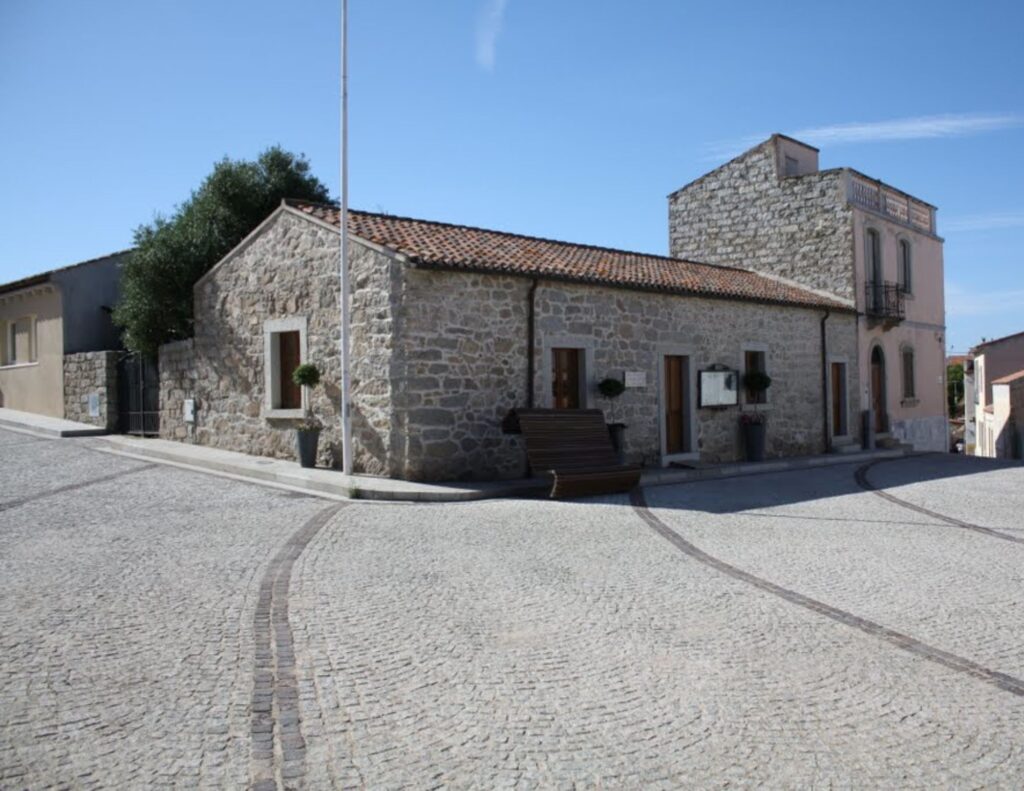
Library and tourist information

Located in Piazza Duomo, it is housed in a beautiful granite building and contains 4 multifunctional rooms, including the municipal library. 

Inside you can find informational materials for visiting the area and trained staff to provide qualified assistance to tourists and travelers to optimize their visit to Telti, Gallura, and Sardinia.    

Other rooms are dedicated to the exhibition of works of art, some which refer to local history, others which hark back to the Tonino Ciceri Award which the Municipality of Telti awards each year to a competing artist. At the rear, a small courtyard hosts literary gatherings and various events.

For information
Tel. +39 349.8703074

Hikes and walks: the magic of Monte Pino

Monte Pino is one of the most evocative places to reach from the Telti area.

It's not just a scenic spot, but a place to explore at a leisurely pace, following forest roads and trails through the woods, past granite outcrops and glimpses that suddenly open up over Gallura. In the early morning hours and especially around sunset, the light continually changes the landscape and offers breathtaking vistas.

GAO Gallura Always Open under the patronage of the Municipality of Telti

stemma di teltiGAO is for discovering the best of Telti and experiencing it all year round!
Thanks to the sponsorship of the Municipality of Telti for the GAO Gallura Always Open project, we've selected the best hospitality and restaurant businesses, as well as local produce, meeting and entertainment venues, shopping, and artisanal shops, in an ideal itinerary to discover the best of Telti. 

You can choose the best facilities For your stay, quality restaurants and pizzerias, local products, and the activities that are the pride of Gallura and Sardinia. And through this Circuit of Excellence, you can experience “The Hill on the Sea” for your weekends and holidays, guaranteed by the Gallura Turismo brand. 

Scroll down and plan your days by choosing from the options we've selected for you! Book directly with the activities to get a service that is more suited to your needs, personalized and more convenient. 


pro loco di Telti

Pro loco of Telti

Committed for years to the growth and development of the territory of Telti and Gallura, the Pro Loco Telti Association is chaired by Marilena Suelzu With great passion and a deep understanding of technical and motivational dynamics, he leads a group of volunteers committed to promoting and enhancing the area. The Association, which is voluntary and apolitical, organizes and promotes, in every form and through every means, the knowledge, protection, and enjoyment of the environmental, historical, cultural, and artistic resources of the area and the community, fostering cooperation and social, economic, and cultural growth.

The Telti Pro Loco is called upon to collaborate on many initiatives, or in some cases organize and coordinate them, including folkloristic events tied to local traditions, events promoting typical products, and other musical, theatrical, entertainment, and cultural events.

The best of Telti: where to sleep

GAO Telti visit Gallura
Tanca Taroni Farmhouse
GAO Telti visit Gallura
Monte Pino Farmhouse
GAO Telti visit Gallura
Li Sciappeddi Farmhouse
lu me trisoru
Lu Me Trisoru
GAO Telti visit Gallura
Rural Tourism Lu Spadulagliu
GAO Telti visit Gallura
Lu Furru Apartments
Guest Houes Piano Piano - Telti
Guest House Floor Plan
GAO Telti visit Gallura
Pasigà House
GAO Telti visit Gallura
LA.RO.CA. Bed and Breakfast.
GAO Telti visit Gallura
B&B Lu Lisandru
Affittacamere Insula Telti
Insula House
GAO Telti visit Gallura
Verdi House
GAO Telti visit Gallura
Ruiu House

The Best of Telti: Eating & Drinking, Shopping, Crafts

Seagull Tavern
Seagull Tavern Restaurant
Bar caffetteria Il Girasole Telti
The Sunflower Bar
GAO Telti visit Gallura
Marilena Clothing
GAO Telti visit Gallura
Timeless Forms

The best of Telti: Local products

GAO Telti visit Gallura
Myrtina Syrup
GAO Telti visit Gallura
Li Tanchi Oil
Panificio Lepori Telti paste fresche
Lepori Bakery and Sweets

Other Telti activities

  • Belvedere Country House
  • The House on the Hill Apartment

visit Telti

Leave a Reply